D2L Platform Redesign
Category:
UX Research / UX/UI Design
Client:
Academic Team Project
Duration:
8 Weeks
Project Overview
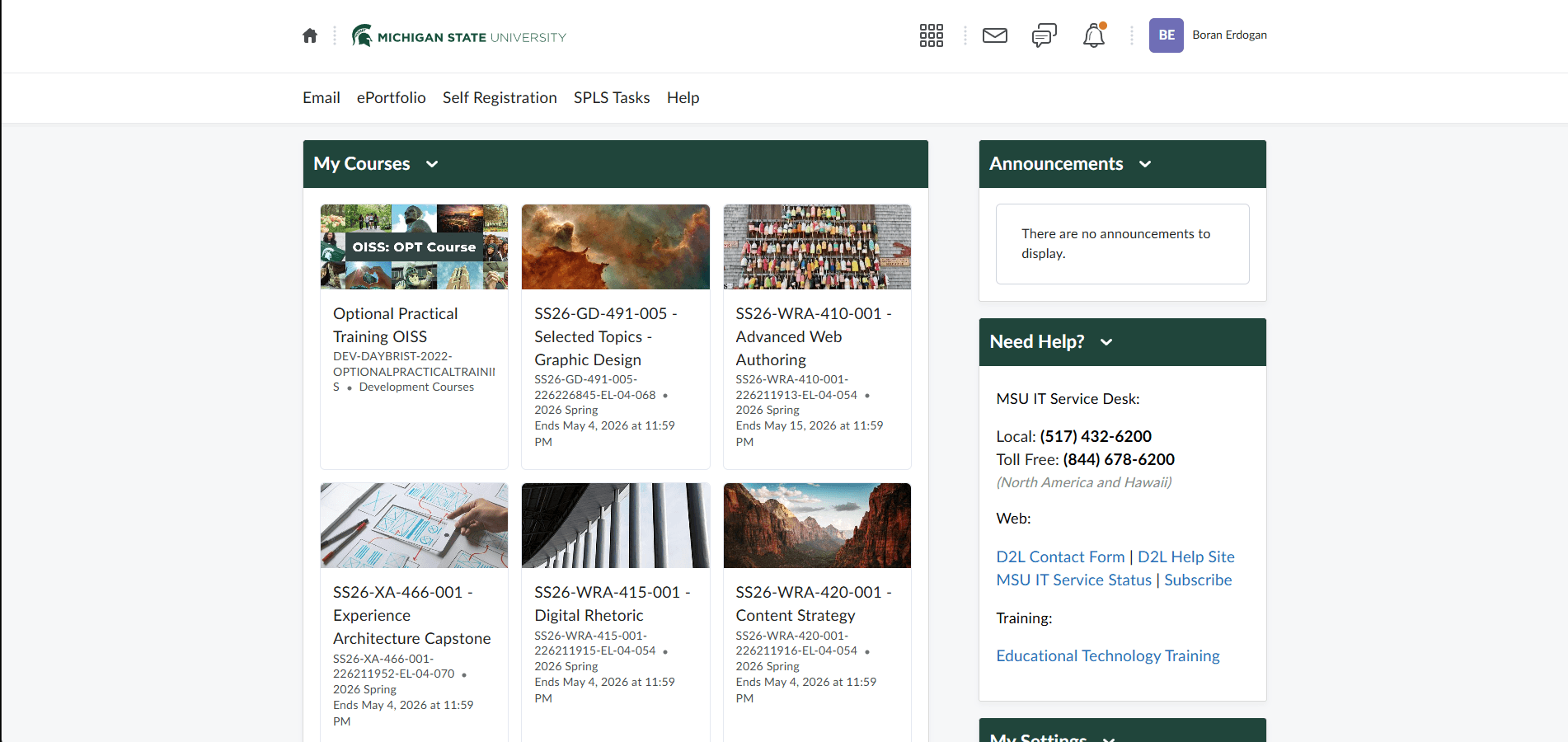
The D2L Platform Redesign project focused on improving the experience of one of the primary learning management systems used at Michigan State University. Because both students and instructors rely on D2L for essential academic tasks, our team approached the project from both perspectives in order to better understand the platform’s usability issues. Through heuristic evaluation, in-person interviews, affinity mapping, and iterative prototyping, we developed a research informed redesign that aimed to simplify navigation, improve clarity, and create a more consistent user experience.
The Challenge
D2L serves two distinct user groups (students and instructors) who rely on the same system for very different goals. Students need quick access to assignments, deadlines, feedback, and course materials, while instructors need efficient tools for managing content, grading, and communication. The challenge was to identify the most critical usability issues within the existing platform and create a redesign that could better support both workflows without adding unnecessary complexity.
Research Process
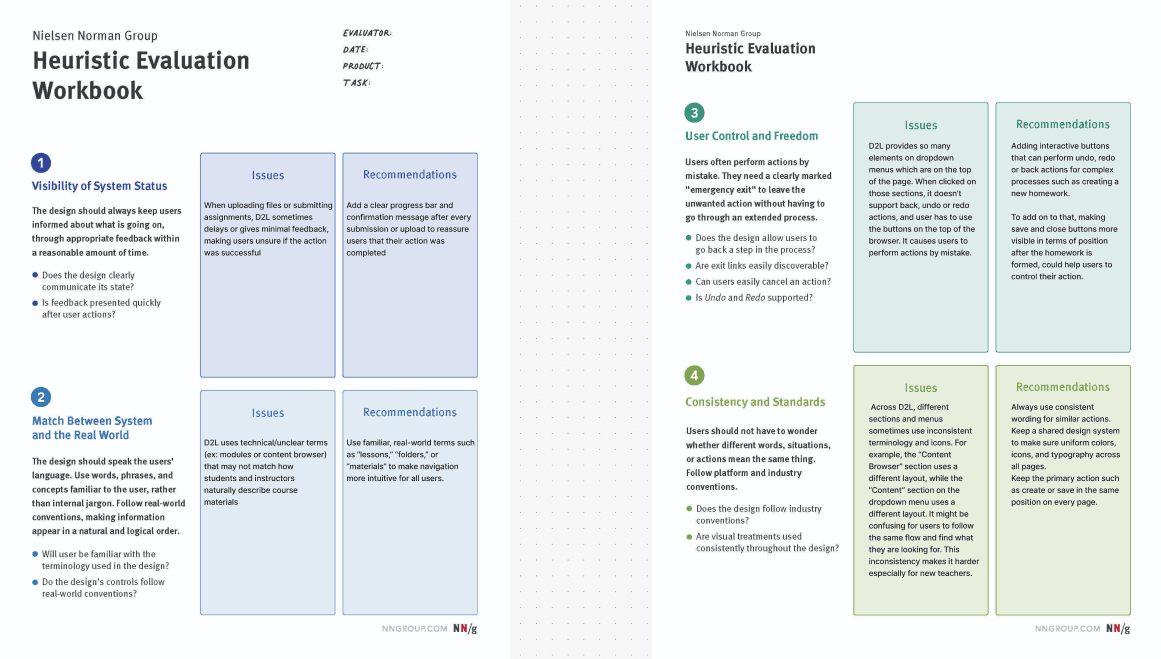
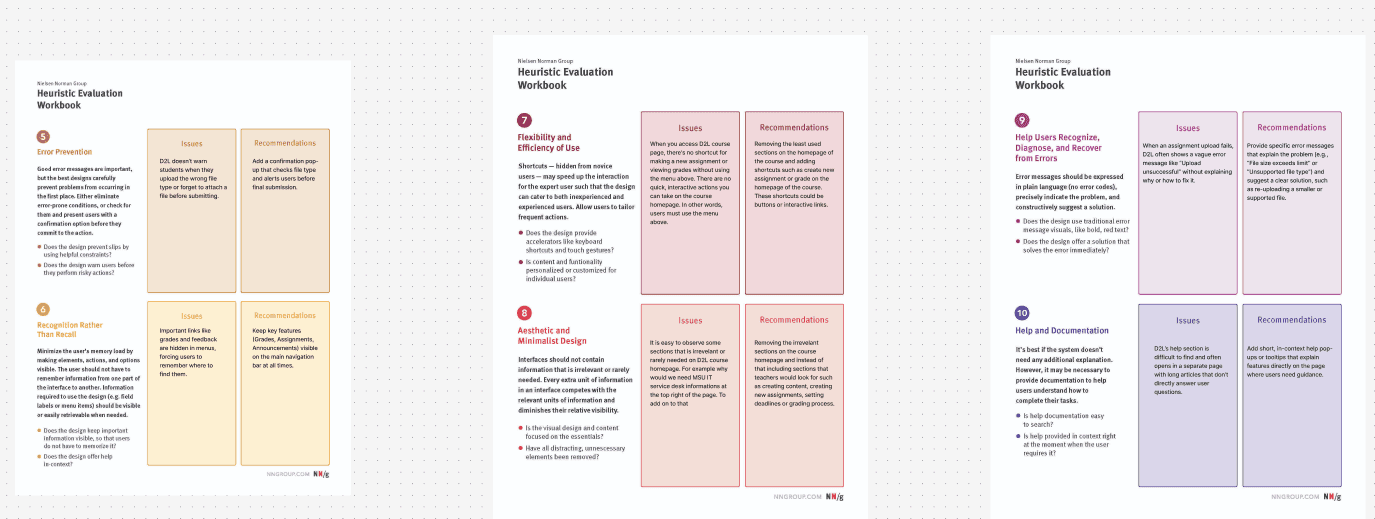
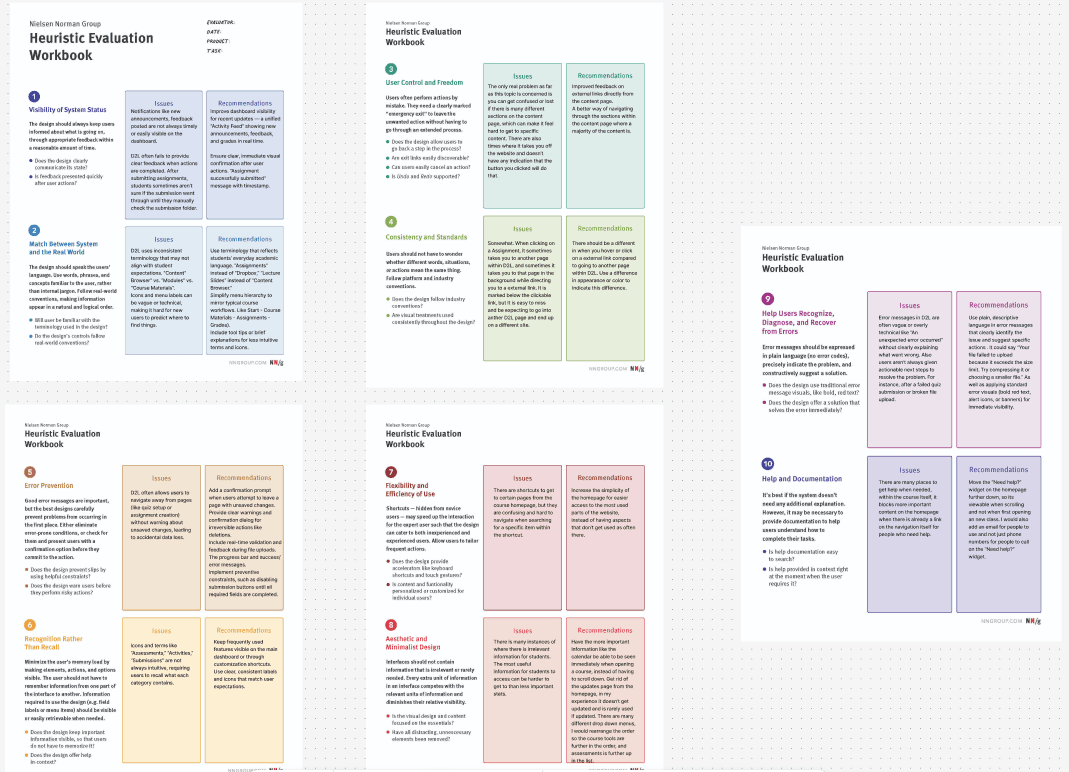
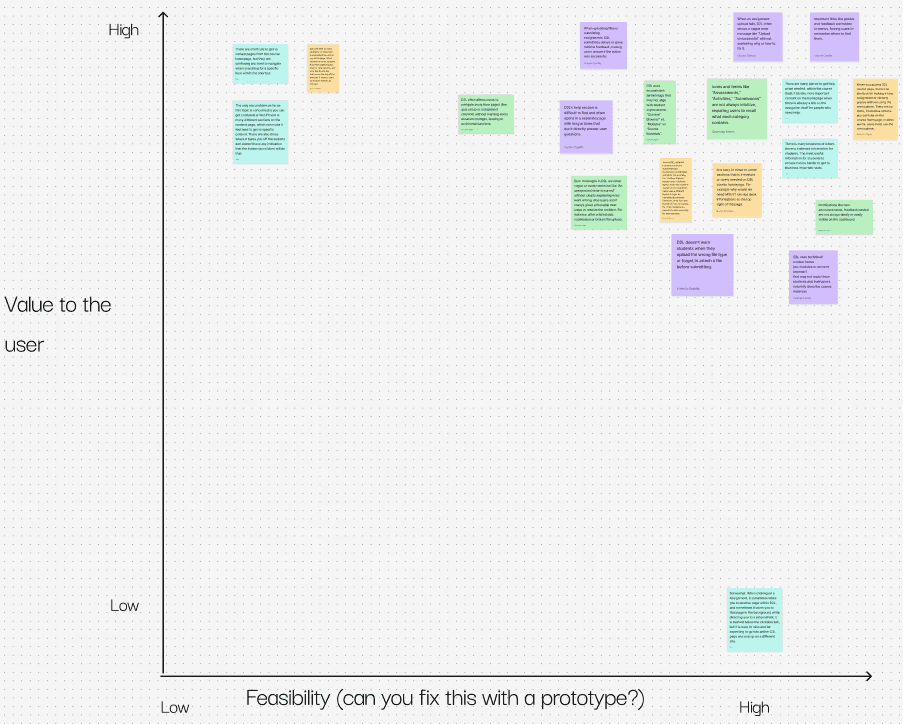
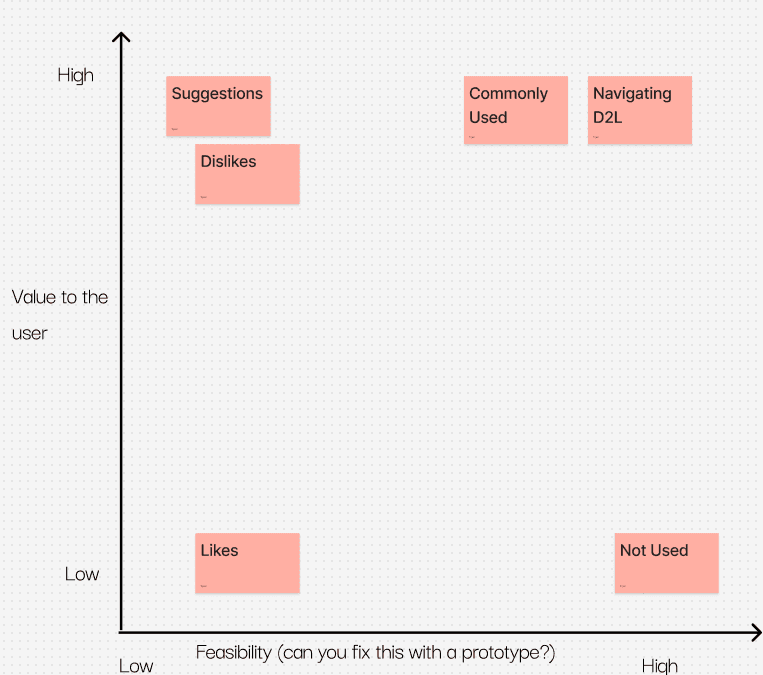
Our process began with a heuristic evaluation of the current D2L interface using the Nielsen Norman Group Heuristic Evaluation Workbook. To cover both sides of the platform effectively, our group of four divided into two teams: one focused on the student experience, and the other focused on the instructor experience. After documenting usability concerns, we translated the findings into sticky notes and organized them within a priority matrix to determine which issues required the most attention.
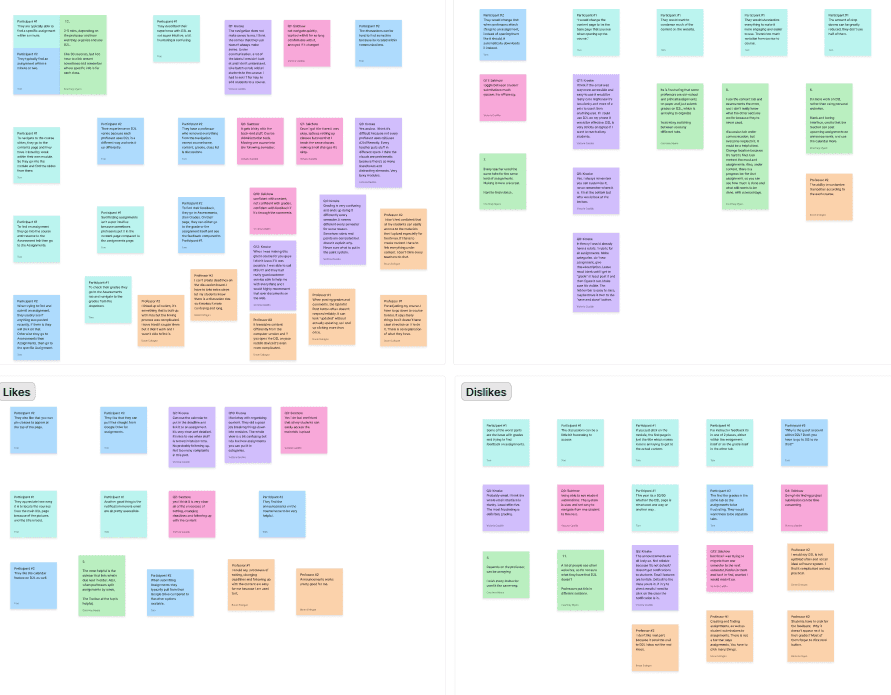
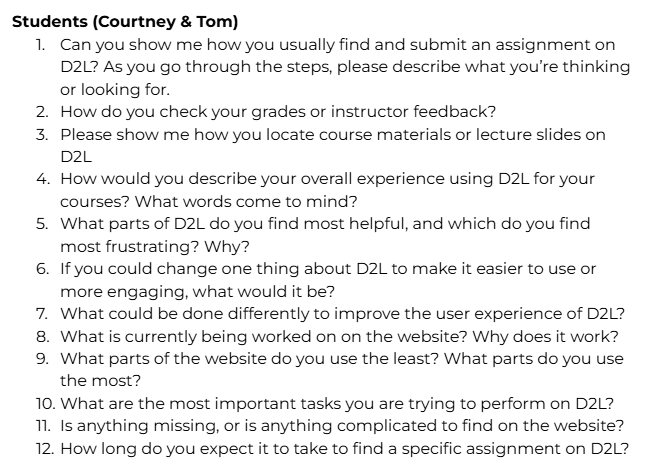
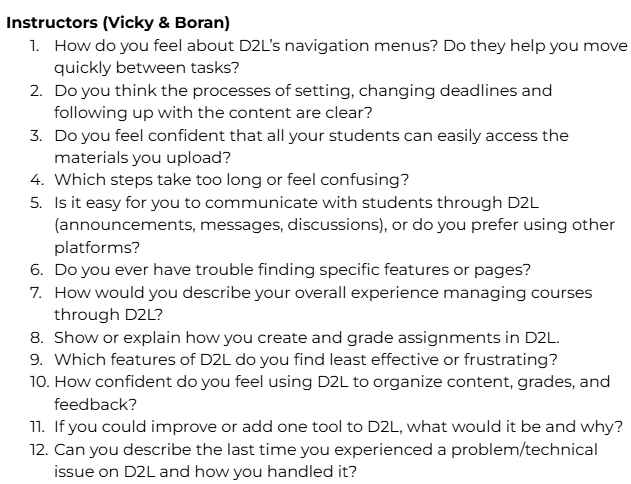
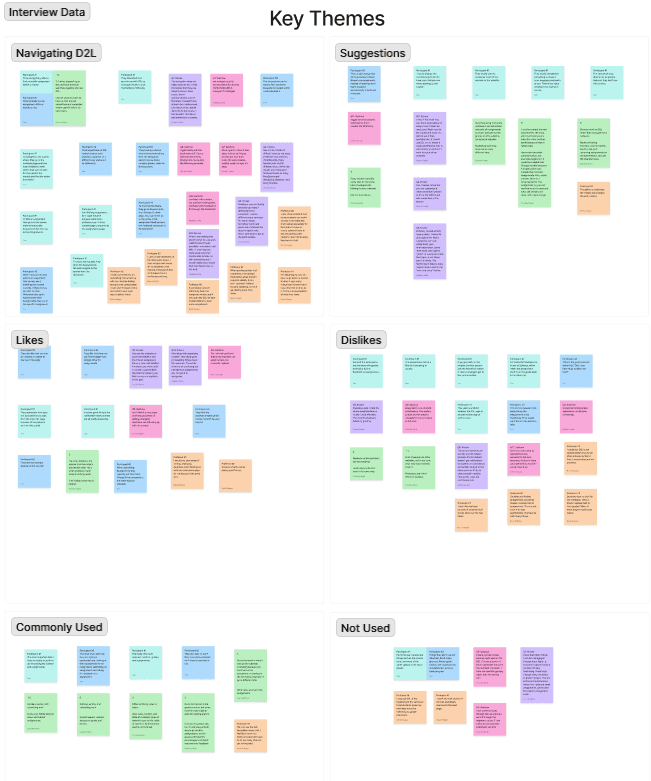
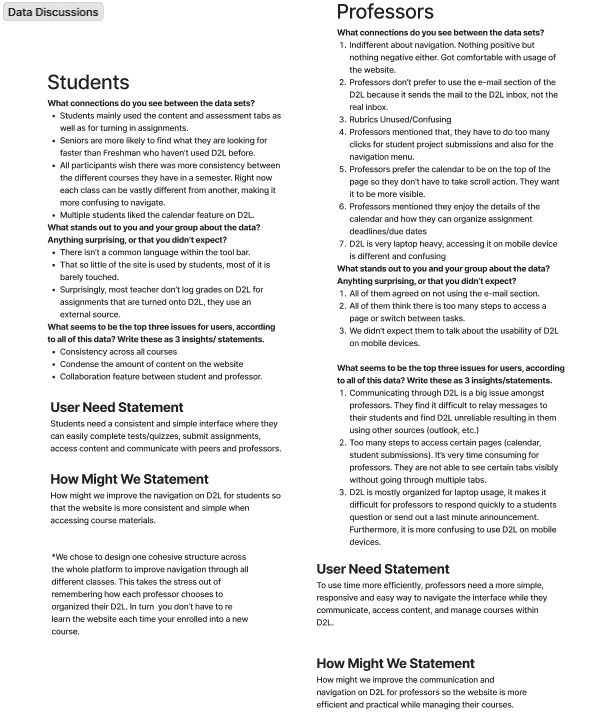
To build on this evaluation, we conducted eight in-person interviews with students and instructors. Each group member completed two interviews, and the insights gathered were then synthesized through affinity mapping. This allowed us to identify recurring themes, pain points, and behavioral patterns across both user groups. A second priority matrix helped us determine which research findings should most directly inform the redesign.
Design Development
Using the insights gathered during research, we moved into low fidelity concept development. Our team again split into student focused and instructor focused groups, using user needs statements and “How Might We” prompts to guide sketches and task flows. These early concepts explored ways to simplify common tasks such as navigating assignments, tracking deadlines, managing courses, and improving communication.
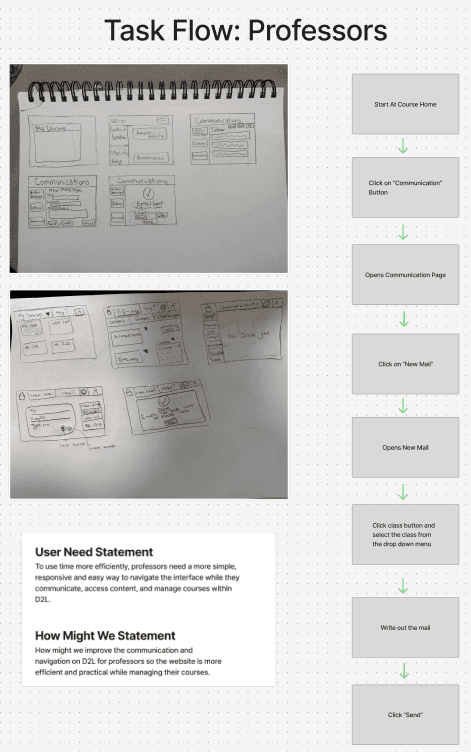
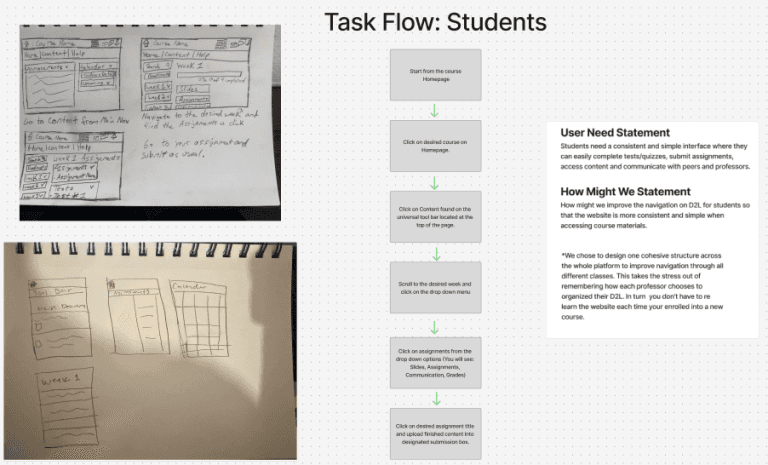
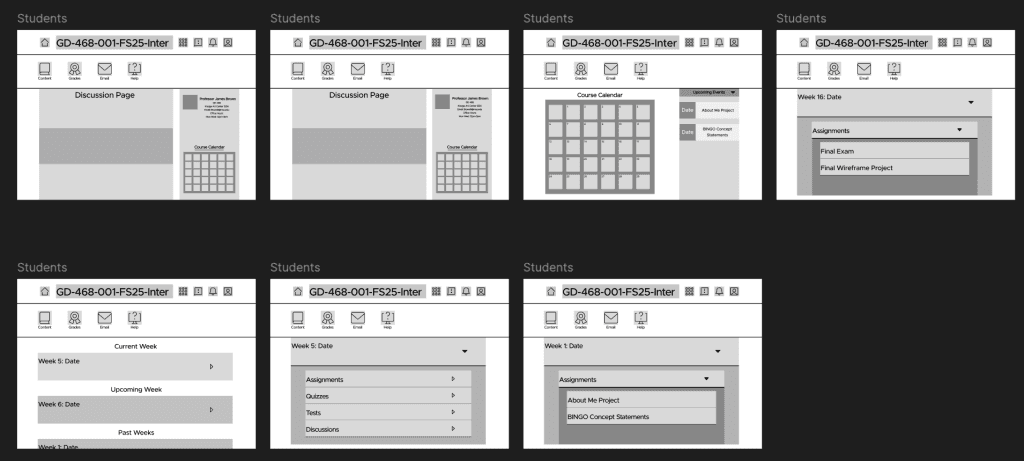
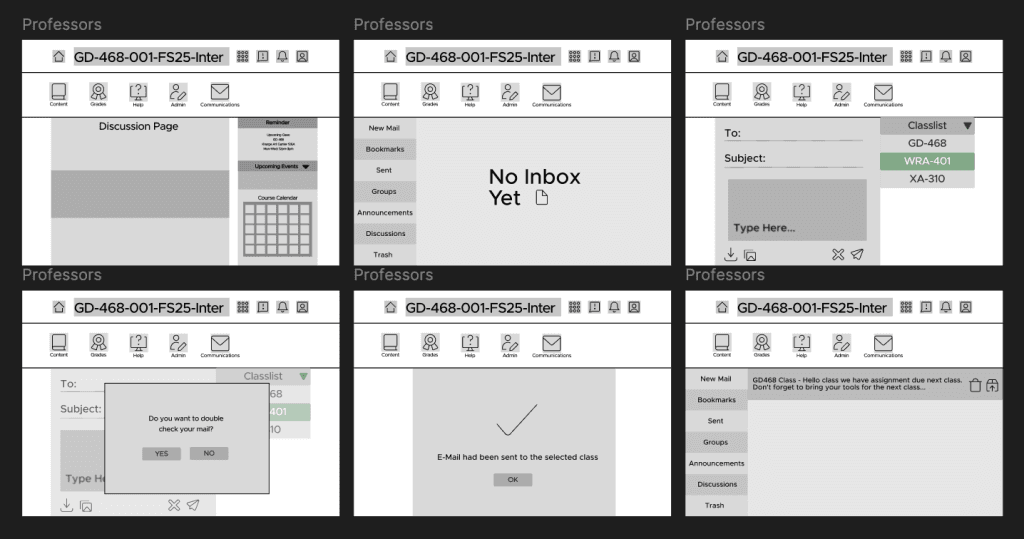
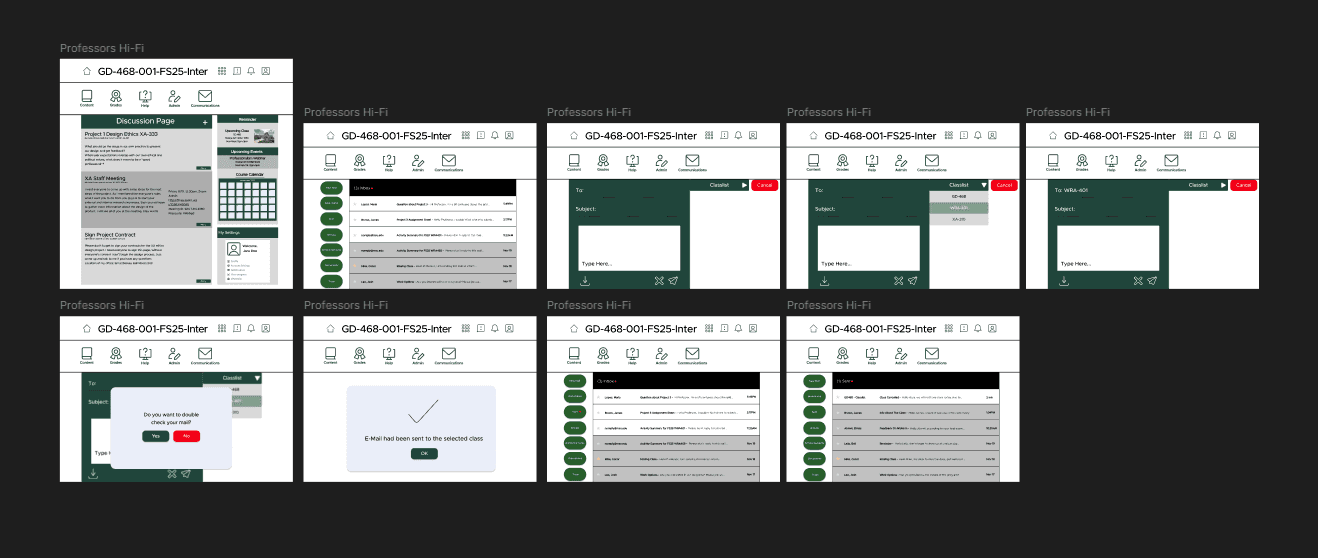
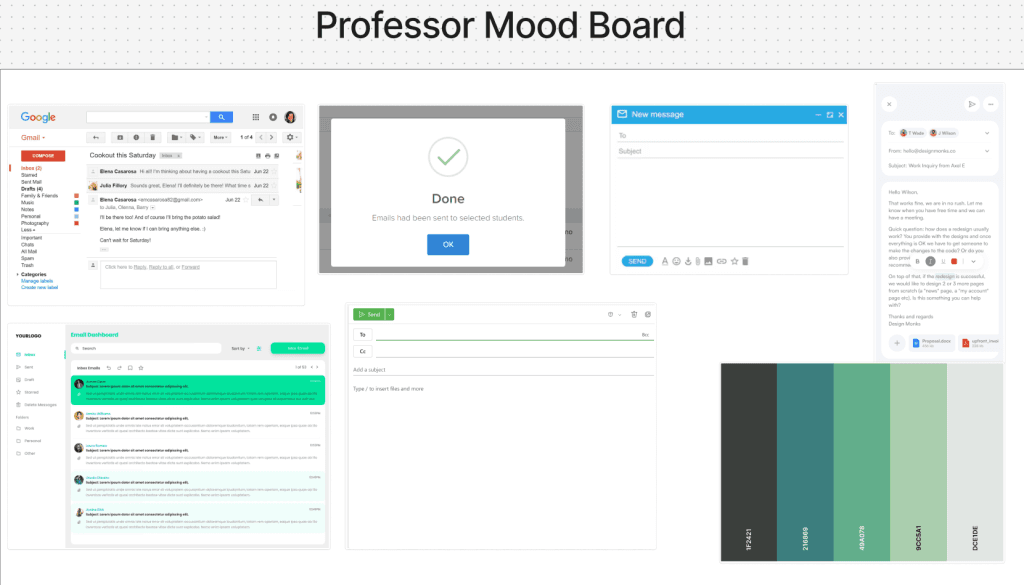
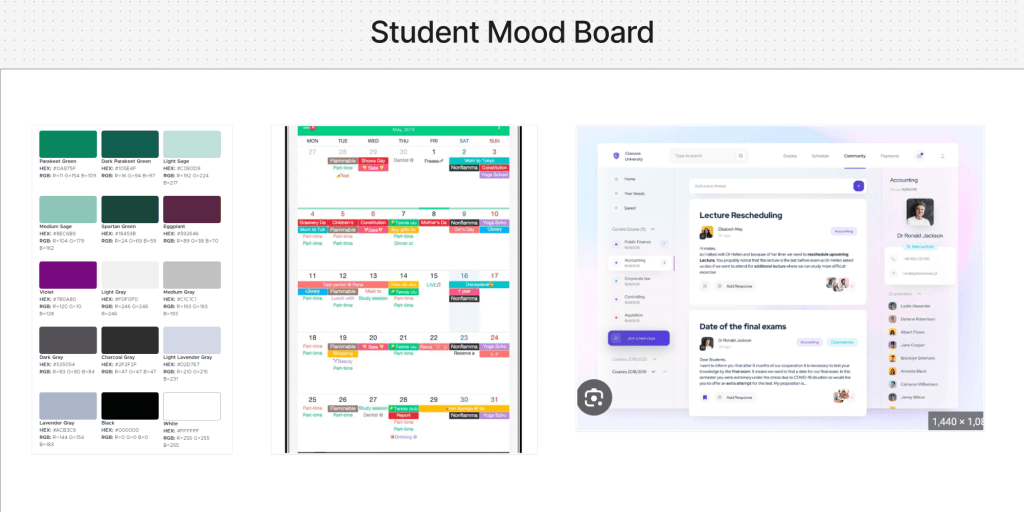
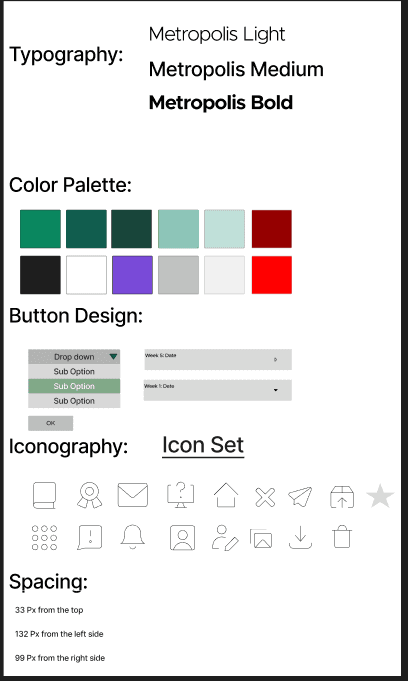
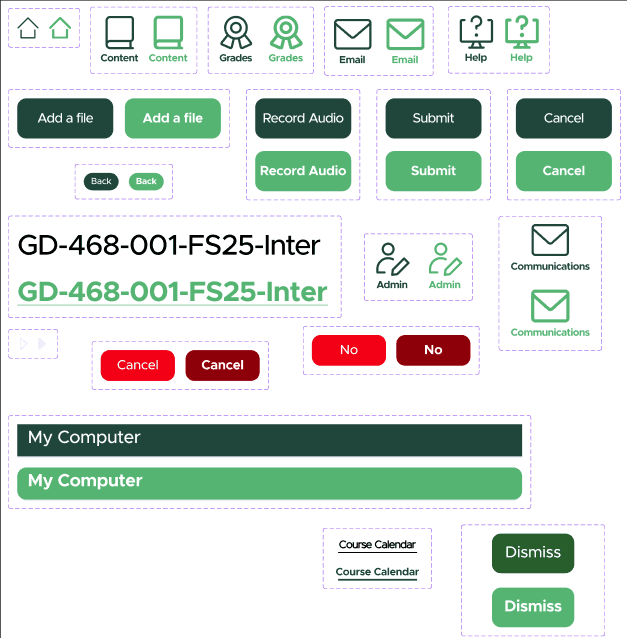
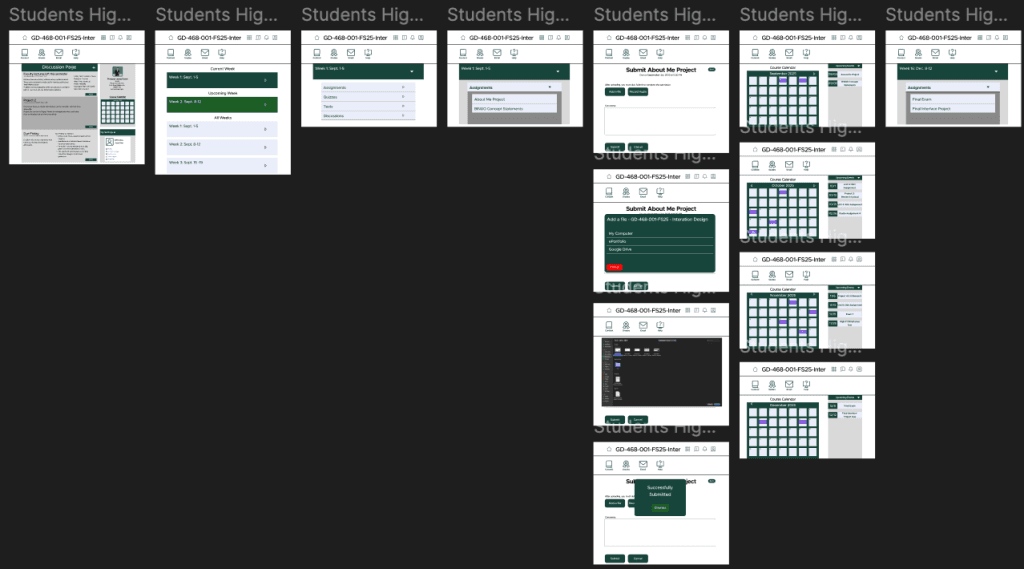
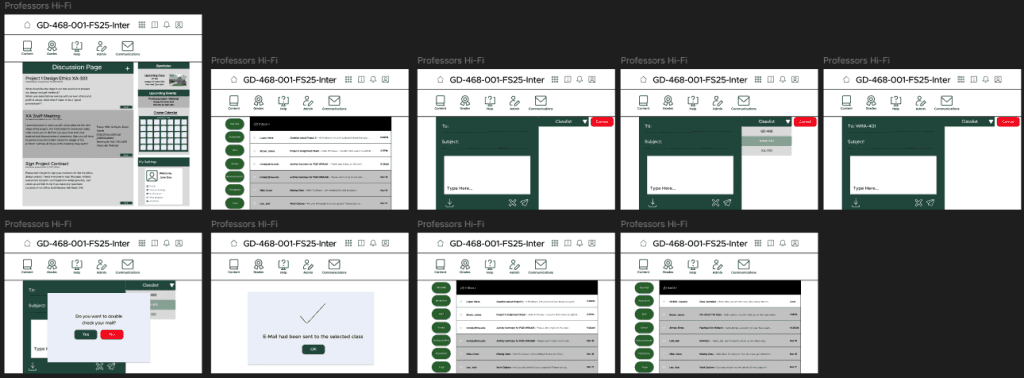
From there, we translated our ideas into mid-fidelity wireframes that clarified layout structure, information hierarchy, and screen flow. Once the core experience was better defined, we created a mood board and style guide to establish a consistent visual direction for the project. In the final stage, we developed high-fidelity screens that brought together the research, interaction decisions, and visual system into a more polished and user centered redesign.
Final Outcome
The final outcome was a redesigned D2L concept that presented a cleaner, more organized, and more intuitive experience for both students and instructors. Key improvements included clearer assignment and submission flows, a more structured course layout, stronger visual hierarchy, and a more accessible calendar experience. The project demonstrated how a research driven UX process can improve clarity, reduce friction, and create a more effective academic platform.
Reflection
This project strengthened my understanding of how UX research and interface design work together within complex systems. It reinforced the importance of designing for multiple user groups and showed how methods such as heuristic evaluation, interviews, affinity mapping, and iterative prototyping can lead to more informed design decisions. More importantly, it highlighted that meaningful redesign is not only about visual improvement, but about creating a system that better supports the people who use it every day.