Real-Time Task Manager App
Category:
Full-Stack Development
Client:
Kuartis Internship Project
Duration:
8 Weeks
Project Overview
This project is a real-time task management web application that I designed and developed during my Frontend Developer internship at Kuartis. I built the frontend using Next.js and React, with a Node.js for the backend and WebSocket connections for real-time updates. Users can create, edit, delete, and track tasks, with changes updating in real time. Working on this project helped me improve my frontend and full-stack development skills and gave me hands-on experience with APIs, authentication, data management, and real-time features.
My Role
I worked on both the frontend and backend of the application. On the frontend, I built a responsive dashboard where users can easily manage tasks, use filters, and track their status. On the backend, I worked with APIs, authentication, task management, and WebSockets to support real-time updates across the application.
I also used Docker to containerize the backend and connected the application to a database to store and manage task data. This gave me hands-on experience with how different parts of a full-stack application work together.
My Approach
I approached the project by focusing on both usability and system functionality. On the frontend, I designed the interface to make task management straightforward and visually clear, ensuring that users could quickly create, edit, filter, and track tasks. On the backend, I structured the application around REST API endpoints for core operations and extended its functionality with a WebSocket server to support real-time communication.
To make the development environment more stable and scalable, I containerized the backend with Docker and connected it to a database so task and user information could be stored consistently across sessions. This approach helped me create a more complete full-stack solution while improving my understanding of real-time systems and application architecture.
Key Features
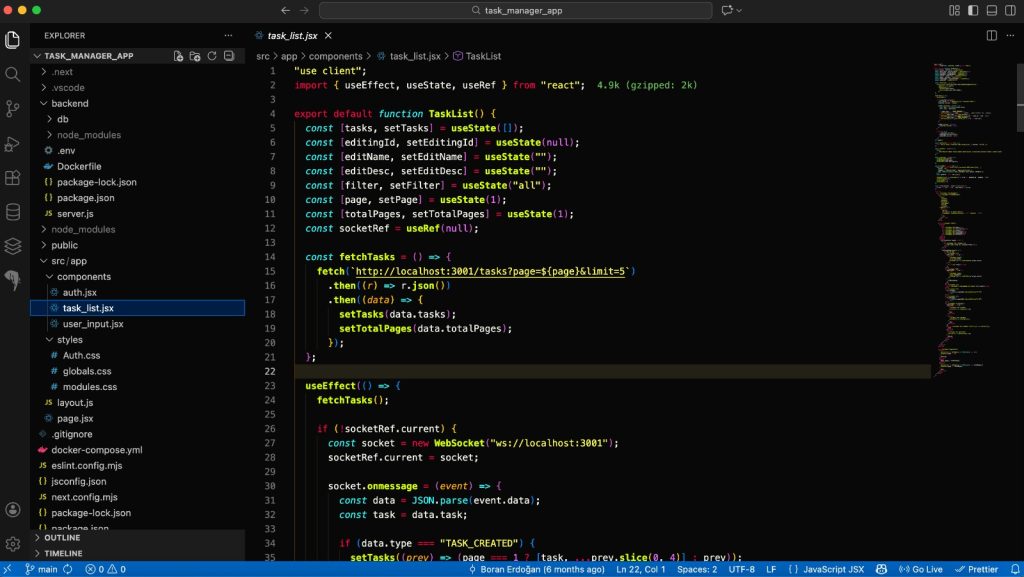
Real-time task updates through WebSocket communication
Task creation, editing, deletion, and status management
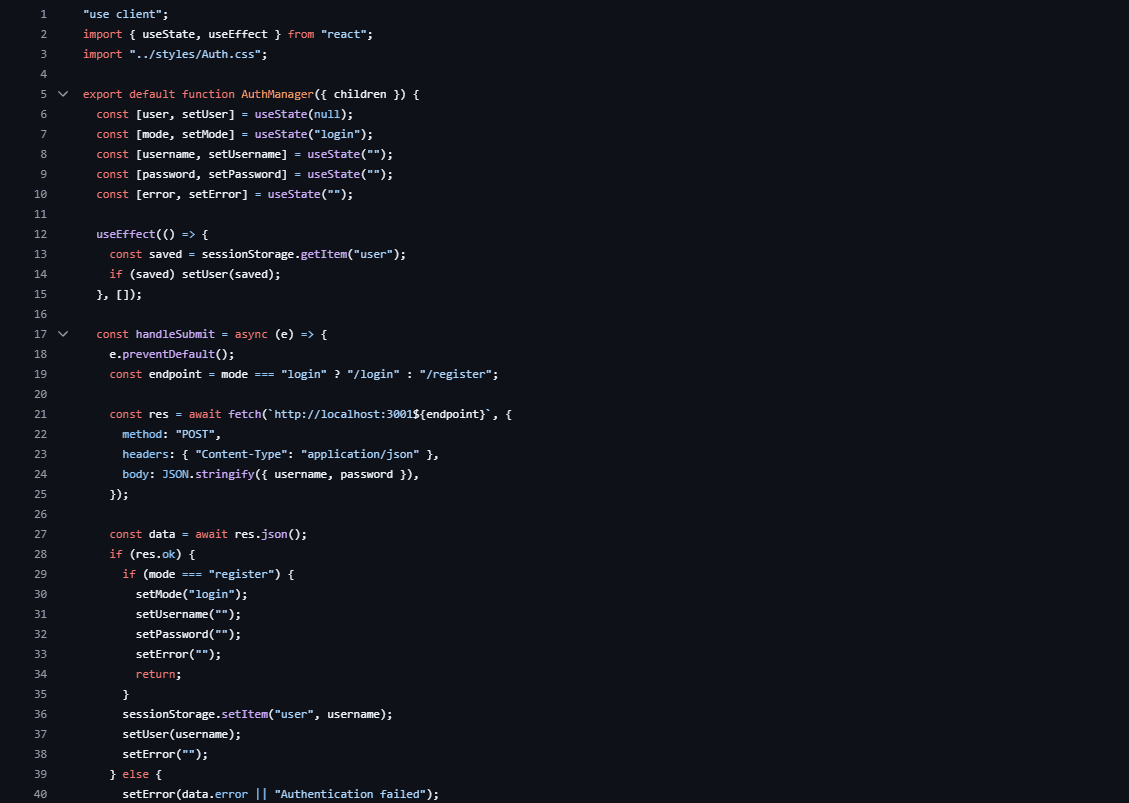
User authentication and protected task access
Responsive dashboard built with Next.js and React
Task filtering by current state or progress
Persistent task and user data through database integration
Containerized backend environment using Docker
Technical Implementation
The backend was built with Node.js and uses a REST API to handle tasks and user authentication. I also implemented WebSockets so task changes are updated instantly on the frontend without needing to refresh the page.
For the frontend, I used Next.js and React to build a clean and responsive dashboard where users can manage tasks, apply filters, and track their progress. I also used Docker for the backend and connected the application to a database to keep task and user data stored across sessions.
Outcome
The final result was a real-time task management web application that brought the frontend and backend together into one complete experience. The application supports real-time task updates, user authentication, task management, and data storage, while keeping the interface simple and responsive.
This project gave me the opportunity to work with different parts of full-stack development, including frontend development, backend logic, database integration, Docker, and real-time communication. It also helped me better understand how a complete web application is built and how each part works together.
Tools / Technologies
React
Next.js
Node.js
HTML/CSS
Docker
WebSocket