Sustainable Fashion Network
Category:
UX Strategy / User Advocacy
Client:
Academic Team Project
Duration:
6 weeks
Project Overview
Sustainable Fashion Network was a group project where we explored the process of creating a sustainable fashion transparency app. Instead of designing the final app, we focused on the research, feedback, and decisions that come before the final design.
My role was User Advocate, where I focused on understanding different user needs and making sure different perspectives were considered throughout the process. This project helped me better understand how research and user feedback can guide design decisions.
My Role
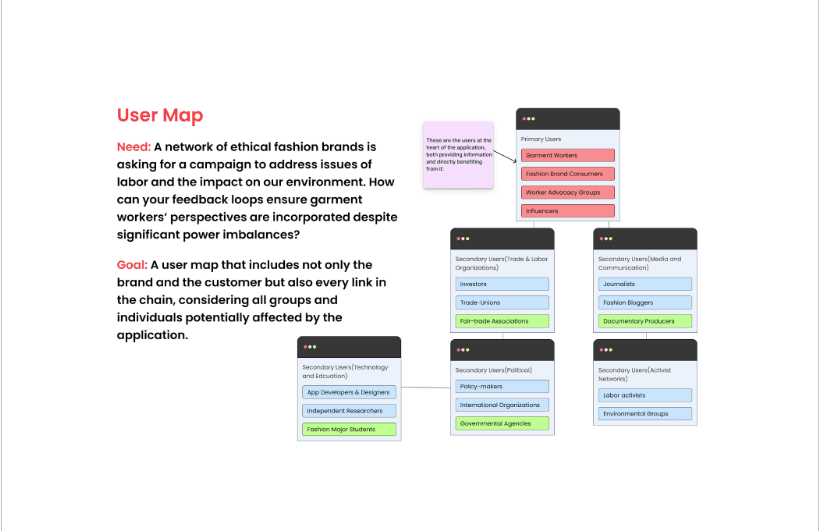
As the User Advocate, my main responsibility was to understand different users and make sure their needs were considered throughout the project. I created a user map to identify different user groups, including those who could be underrepresented or face barriers when using the platform.
I also worked on ways to make the feedback process more inclusive and accessible, exploring ideas like anonymous feedback, multilingual options, offline support, and community feedback. This helped me understand how different user needs can influence the design process.
The Challenge
One of the main challenges was understanding how to make the process inclusive for different types of users. Not everyone has the same access to technology, language support, or the same comfort level when sharing feedback.
As the User Advocate, I focused on identifying these differences and thinking about how we could include more perspectives in the design process. Creating a user map helped me better understand the different user groups and the challenges they might face.
My Approach
My approach focused on understanding how different users could participate and share feedback throughout the design process. I focused on four main areas: Representation, Participation, Accessibility, and Impact. These helped me think about whether different users were being included and whether their feedback could actually make a difference.
I also explored ways to make participation more accessible, such as multilingual options, anonymous feedback, offline access, and community feedback sessions. This process helped me think about inclusion from different perspectives and understand how it can be considered throughout the design process.
Key Contributions
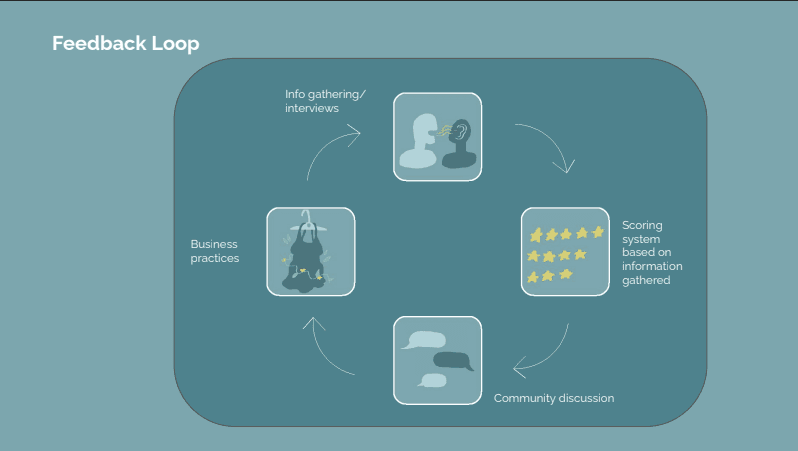
Designed an inclusive ethical feedback-loop methodology for the app experience
Built a user map to identify marginalized groups and possible exclusion points
Defined evaluation criteria around representation, participation, accessibility, and impact
Contributed to the app’s search experience by helping connect products to brand profiles and ethical scores
Helped frame the project around equity, accessibility, and ethical accountability in design decisions
Reflection
This project helped me better understand the importance of inclusion and accessibility in the design process. I learned that understanding users is not only about usability, but also about making sure different perspectives and needs are considered.
It also gave me more experience with user research, user mapping, and feedback, and showed me how these can help guide better and more inclusive design decisions.