Sorghum Bicolor Fuel Cell Research Project
Category:
Scientific Research / Sustainability
Client:
TÜBİTAK-Supported Research Project
Duration:
2 years
Project Overview
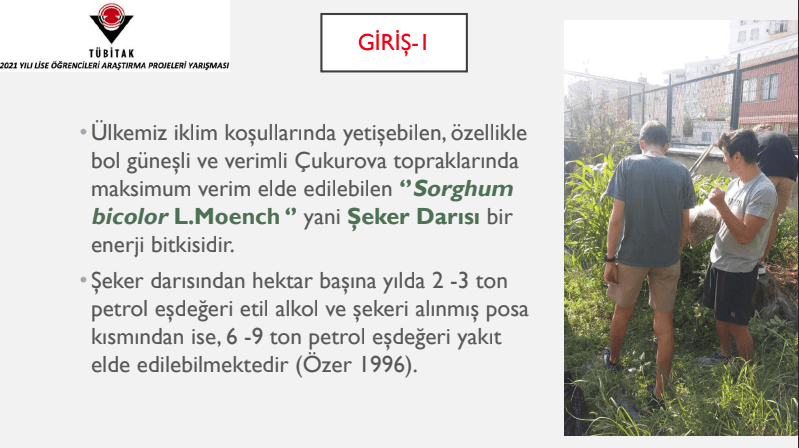
Between 2020 and 2022, I worked as the project owner of a TÜBİTAK-supported research project focused on sustainable electricity generation using fuel cell technology. The goal was to explore a more sustainable and locally accessible way of producing electricity using Sorghum bicolor, an energy crop that grows well in Turkey.
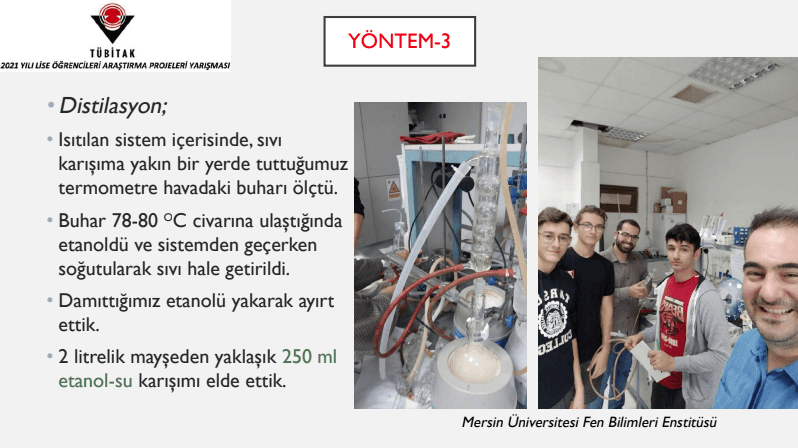
In the project, we extracted material from Sorghum bicolor and converted it into bioethanol through fermentation and distillation. We then used the bioethanol in a Direct Ethanol Fuel Cell (DEFC) to generate electricity. We also tested agarose gel as an alternative membrane material to explore a more accessible option compared to traditional materials like Nafion.
My Role
As the project owner, I was responsible for leading the project from the early research and planning stages to the final presentation. My role included planning experiments, collecting data, documenting the process, coordinating the project, and presenting the final results.
I was also involved in the testing process and organizing our research and findings. This experience helped me improve my research, project management, and communication skills while working on a long-term scientific project.
Research Goal
The goal of this project was to explore a more sustainable and locally accessible way of generating electricity by combining agriculture with fuel cell technology. We focused on using Sorghum bicolor as a source for producing bioethanol and testing whether it could be used to generate electricity through a Direct Ethanol Fuel Cell (DEFC).
We also explored agarose gel as an alternative membrane material, with the goal of finding a more accessible option compared to commonly used imported materials. Overall, the project focused on finding a more environmentally friendly and locally supported approach to energy production.
Process and Methodology
The project started with collecting extract from Sorghum bicolor, which we selected because of its potential as an energy crop and its ability to grow well in Turkey’s climate. We then converted the plant extract into bioethanol through fermentation and distillation. The resulting ethanol was tested in a Direct Ethanol Fuel Cell (DEFC) to see if it could generate electricity.
We also worked on our own fuel cell design using an agarose gel membrane, copper and zinc plates, conductive materials, and a 3D-printed housing. This allowed us to test agarose gel as a more accessible alternative to traditional membrane materials. At the end of the project, we were able to generate and measure electricity using our system.
Key Outcomes
The project showed that we could generate electricity using bioethanol produced from Sorghum bicolor. During our testing, the DEFC system produced 1.2V / 10mW of electricity, and our agarose gel fuel cell prototype was also able to generate electrical output using the bioethanol-water mixture.
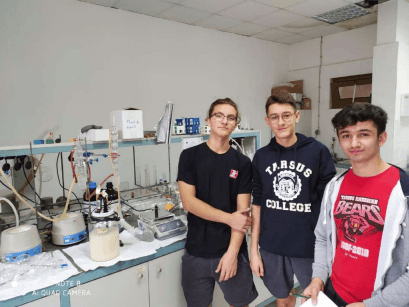
Throughout the project, we also had the opportunity to work with professors from Mersin University during the testing and experimental process. The project was recognized at the 52nd TÜBİTAK High School Students Research Project Competition in Adana and also received the Most Sustainable Project award at the TAC Science Fair.
Reflection
This project gave me the opportunity to lead a long-term research project and experience the different stages of scientific research, from planning and testing to documenting and presenting the results.
It helped me improve my research, problem-solving, project management, and communication skills. Most importantly, the project showed me how science and technology can be used to explore real-world sustainability problems and find new solutions using available resources.
Link to Presentation (In Turkish)